
If you’ve experienced water damage, you’ve probably heard two terms used interchangeably: water mitigation and water damage restoration.
They are related—but they are not the same thing.
Understanding the difference helps you:
- Know what services you actually need
- Avoid incomplete or ineffective cleanup
- Protect your home from mold and long-term damage
Here’s a clear, homeowner-friendly breakdown.
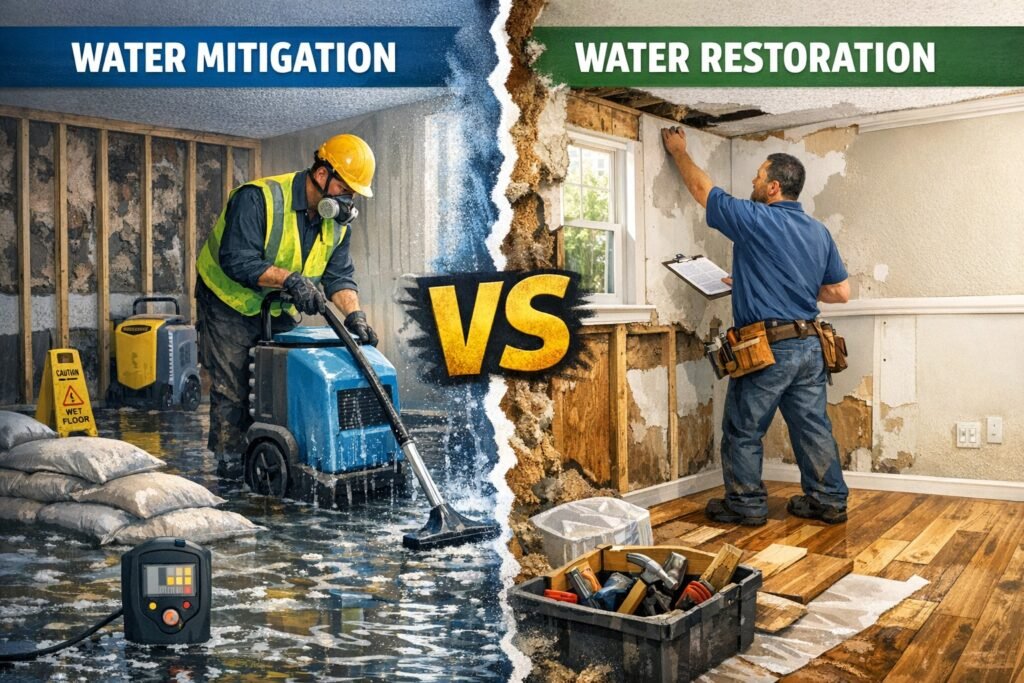
What Is Water Mitigation?
Water mitigation is the immediate response to stop water damage from getting worse.
It focuses on:
- Stopping the water source
- Removing standing water
- Preventing further spread of moisture
- Stabilizing the environment
Common Water Mitigation Services Include:
- Emergency water extraction
- Temporary drying and dehumidification
- Removing soaked materials when necessary
- Securing the property to prevent additional damage
💡 Think of mitigation as “damage control.”
It happens fast and is most critical in the first 24–48 hours.
What Is Water Damage Restoration?
Water damage restoration is the complete process of repairing and restoring your home back to its pre-loss condition.
Restoration focuses on:
- Fully drying hidden moisture
- Preventing mold growth
- Repairing or replacing damaged materials
- Returning your home to normal use
Water Damage Restoration May Include:
- Structural drying of walls and subfloors
- Mold prevention or remediation if needed
- Drywall, flooring, and insulation replacement
- Final cleaning, sanitizing, and repairs
💡 Restoration is the long-term solution.
Mitigation stops the problem—restoration finishes it.
Key Differences at a Glance
| Water Mitigation | Water Damage Restoration |
| Emergency response | Full repair & recovery |
| Stops further damage | Fixes existing damage |
| Short-term | Long-term |
| Focuses on water removal | Focuses on rebuilding |
Do You Need Both?
In most cases: yes.
Water mitigation is the first phase, but it’s rarely enough on its own. Without full restoration:
- Moisture may remain trapped
- Mold can still develop
- Structural damage can worsen over time
Skipping restoration often leads to repeat issues and higher costs later.
How Insurance Looks at Mitigation vs. RestorationInsurance companies often treat these as separate line items.
- Mitigation is expected immediately
- Restoration requires proper documentation
- Delays or incomplete work can impact coverage
A professional restoration company helps ensure:
- Proper documentation
- Industry-standard procedures
- A smoother claims process
Why Professional Equipment MattersHousehold fans and dehumidifiers are not designed to:
- Dry behind walls
- Remove moisture from subfloors
- Control humidity at scale
Professional restoration teams use:
- Moisture meters and thermal imaging
- Commercial air movers and dehumidifiers
- Controlled drying strategies
This prevents hidden damage and mold growth.
How CleanUSA Handles Water Damage the Right Way
At CleanUSA, we don’t stop at surface-level cleanup.
We provide:
- Immediate water mitigation
- Complete water damage restoration
- Mold prevention built into every job
- Clear communication and professional documentation
Our goal is simple:
Fix the problem fully—so it doesn’t come back.
Need Help Now? CleanUSA Is Ready.
If you’re dealing with water damage and aren’t sure what you need, we can help assess the situation and explain your options clearly.
📞 Contact CleanUSA today for fast, professional water damage mitigation and restoration.