
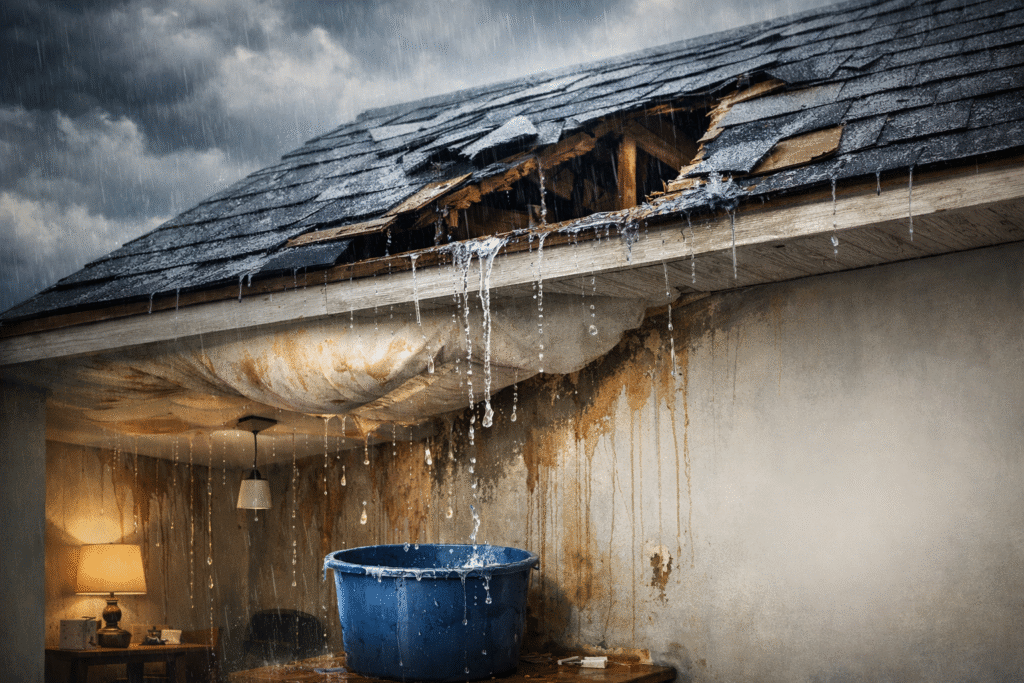
After a storm, roof leaks are one of the most common—and most underestimated—sources of water damage.
What starts as a small drip can quickly turn into hidden damage inside walls, ceilings, and insulation, often spreading far beyond where the leak appears.
Here’s why roof leaks are so dangerous—and what to do if you suspect one after a storm.
Why Roof Leaks Are Easy to Miss
Storm damage doesn’t always cause obvious roof failure.
High winds and heavy rain can:
- Lift or loosen shingles
- Damage flashing around vents and chimneys
- Create small punctures or gaps
These issues may not be visible from the ground, but water can still enter the home.
How Water Travels After a Roof Leak
Once water enters the roof system, it can:
- Run along rafters and beams
- Soak insulation
- Pool above ceilings
- Travel down inside walls
This means the visible damage may appear far from the actual leak.
Common Signs of Roof Leak Water Damage
Watch for:
- Water stains on ceilings or walls
- Bubbling or peeling paint
- Damp or sagging drywall
- Musty odors in upper rooms or attics
- Drips hours or days after rainfall
These signs often indicate ongoing moisture, not a one-time issue.
Why Roof Leaks Lead to Mold So Quickly
Attics and wall cavities are:
- Dark
- Warm
- Poorly ventilated
These conditions allow mold to grow rapidly when moisture is present—sometimes within 24–48 hours.
What to Do If You Suspect a Roof Leak
- Limit further water exposure
Place buckets or protective coverings if needed. - Avoid climbing on the roof
Storm-damaged roofs can be unsafe. - Document visible damage
Photos help with insurance claims. - Call a professional restoration company
Early moisture detection prevents bigger problems.
Why Drying the Ceiling Isn’t Enough
Drying visible surfaces alone:
- Does not dry insulation
- Does not remove moisture inside walls
- Does not prevent mold
Professional drying addresses the entire moisture path, not just the endpoint.
How Roof Leak Water Damage Is Professionally Restored Professional restoration may include:
- Moisture detection in ceilings and walls
- Controlled drying and dehumidification
- Removal of damaged materials if necessary
- Mold prevention measures
- Repairs and restoration
This ensures the leak’s impact is fully resolved.
How CleanUSA Handles Roof Leak Water Damage
At CleanUSA, we understand how deceptive roof leaks can be.
Our team:
- Identifies hidden water intrusion
- Fully dries affected areas
- Prevents secondary damage
- Restores your home properly
We focus on solving the problem before it spreads.
Suspect a Roof Leak After a Storm?
Even minor leaks can cause major damage if ignored.
📞 Contact CleanUSA today for professional inspection and water damage restoration after a storm.