
One of the most stressful questions homeowners face after water damage is:
“Will my insurance cover this?”
The answer is often yes—but not always. Coverage depends on how the water damage happened, how quickly it was addressed, and how well it was documented.
Below is a clear, homeowner-friendly breakdown of what’s typically covered, what’s not, and how to protect yourself during the claims process.
When Water Damage Is Usually Covered
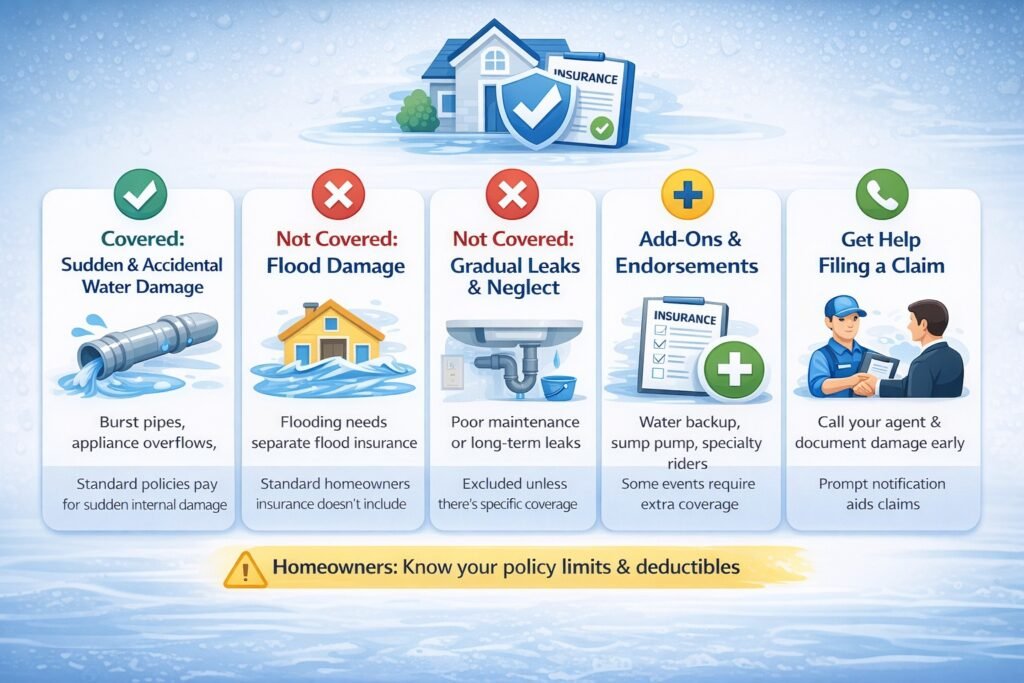
Most homeowners insurance policies do cover sudden and accidental water damage.
Common covered situations include:
- Burst or leaking pipes
- Appliance failures (washing machines, water heaters, dishwashers)
- Accidental overflows (toilets, sinks, tubs)
- Water damage caused by putting out a fire
In these cases, insurance often covers:
- Emergency water mitigation
- Drying and dehumidification
- Repairs to walls, floors, and ceilings
- Restoration back to pre-loss condition
When Water Damage Is Often NOT Covered
Insurance usually does not cover water damage caused by neglect or long-term issues.
Common exclusions include:
- Gradual leaks that went unnoticed
- Poor maintenance or aging plumbing
- Flooding from external sources (without flood insurance)
- Sewage backups (unless you have a specific rider)
💡 If damage occurred slowly over time, insurers may deny the claim.
Flood Damage vs. Water Damage: A Critical Distinction
This is where many homeowners get confused.
- Water damage: originates inside the home (pipes, appliances, plumbing)
- Flood damage: comes from outside the home (rising groundwater, storm surge, overflowing rivers)
Flood damage is not covered under standard homeowners insurance and requires a separate flood policy.
Why Fast Action Protects Your Claim
Insurance policies expect homeowners to act promptly to prevent further damage.
Delays can result in:
- Reduced coverage
- Claim denials
- Mold exclusions
Calling a professional restoration company quickly shows that you took reasonable steps to mitigate damage.
What Documentation Insurance Companies Expect
Strong documentation makes a big difference.
Insurance adjusters typically look for:
- Photos and videos of the damage
- Moisture readings and drying logs
- A clear scope of work
- Evidence that industry standards were followed
Professional restoration companies provide this automatically.
Will Insurance Cover Mold?Sometimes—but with conditions.
Mold is typically covered only if:
- It resulted directly from a covered water loss
- The water damage was addressed promptly
If mold developed due to delays, insurers may deny that portion of the claim.
Should You Call Insurance First or a Restoration Company?In most cases, it’s smart to:
Call a restoration company first to stop the damage
- Then notify your insurance provider
This helps prevent further loss and ensures proper documentation from the start.
How CleanUSA Helps with the Insurance ProcessAt CleanUSA, we work alongside homeowners—not against them.
We help by:
- Documenting damage thoroughly
- Following insurance-approved restoration standards
- Providing clear scopes of work
- Communicating professionally when needed
Our focus is restoring your home correctly while helping the process go as smoothly as possible.
Unsure If Your Water Damage Is Covered?
Every policy is different, and every situation is unique.
📞 Contact CleanUSA today for a professional assessment and guidance on next steps after water damage.